
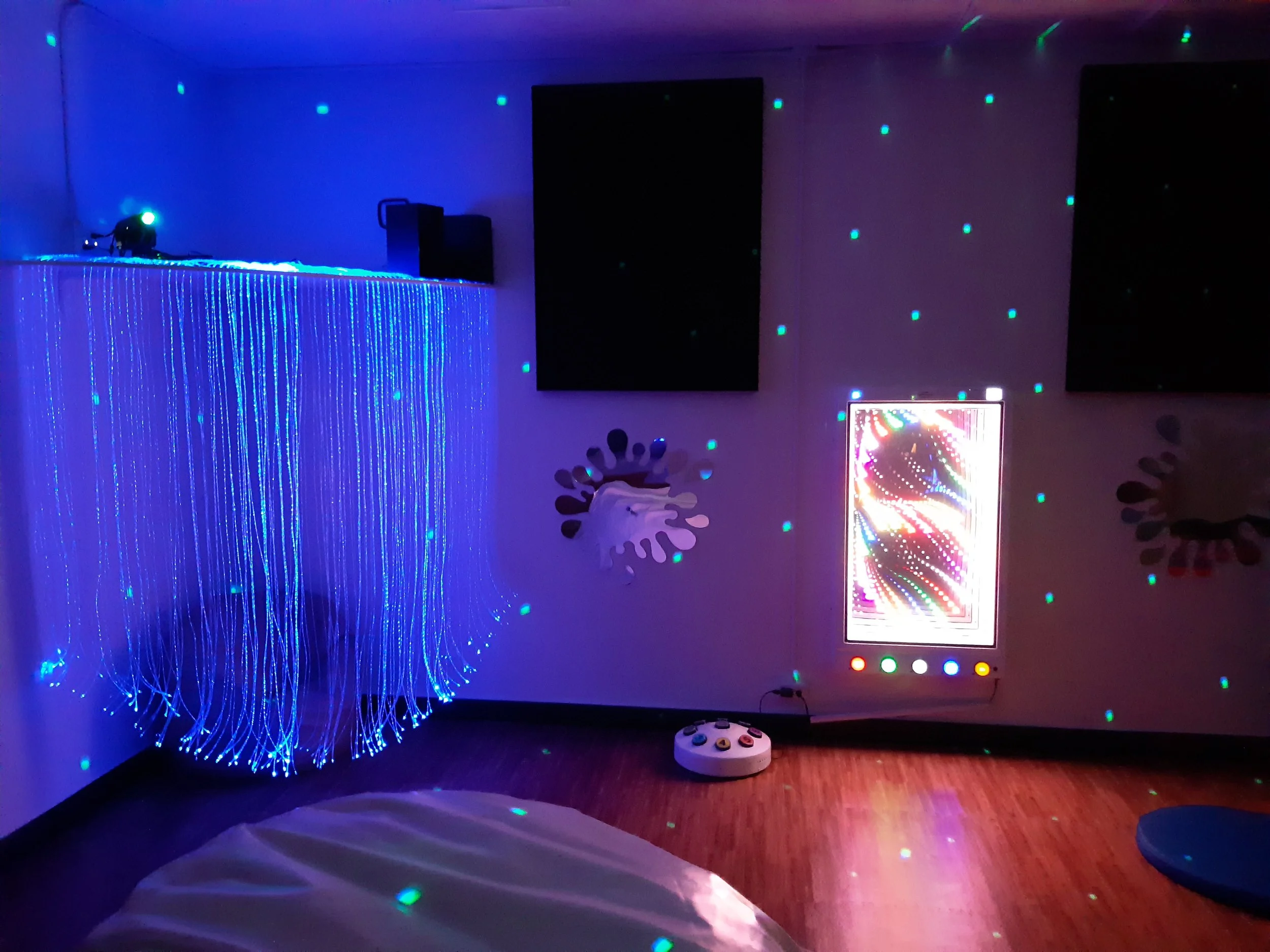
Snoezellen Room - Westmount Campus
Neurodiversity Celebration Week
At ABC Head Start, our commitment has always been to create learning environments where every child feels safe, supported, and able to flourish. The learning environment is an active part of a child’s experience, even referred to as the “third teacher” in Reggio Emilia and other childcare philosophies (Strong-Wilson and Ellis, 2007). A child’s learning environment shapes how they explore, regulate their emptions and engage with the world around them.
Sometimes, the children who come through our doors arrive with uncertain expectations about what their future might look like. At ABC Head Start, we sometimes work with children whose parents or doctor have communicated that they don’t expect their child to ever develop a vocabulary or be able to communicate with words.
One of these children was, whom we’ll call “Amar,” (name has been changed for privacy.) Amar joined our West-Edmonton classroom in 2022. At the time, his team had been told that he might never develop spoken language.
One day, a few months into his enrollment, during play in the sensory room, he became fascinated with a simple activity: Floating fish and bubbling lights. When the bubble stopped, Amar surprised the team and signed “more” in ASL. Soon, that sign language grew into Amar’s first word: “more!” Throughout the rest of the program year, he uncovered new words day by day in the multi-sensory room and the whole staff team delighted in the news that, “another word was added to his vocabulary during fish play today!”
For more than forty years, many of our locations have been located inside public and catholic schools. ABC has set up classrooms in church basements, community leagues, and other spaces that our dedicated team worked hard to transform into welcoming learning environments.
While we appreciated being part of these communities we were extremely limited in our ability to design the kinds of specialized, thoughtful spaces that many neurodivergent learners need. These (typically) short-term placements created instability, requiring our programs to pack up and move year to year.
That realization guided our shift away from school‑based programming toward a purpose‑built campus model—a change grounded in intention, research, and the needs of our children.
Our new campus spaces allow us to design with neurodivergent learners at the centre. Multi‑sensory (Snoezelen‑style) rooms provide calming, controlled sensory experiences that help children regulate their emotions, reduce anxiety, and prepare their bodies for learning. For some children, this might mean quietly watching bubbles rise in a column of light, listening to soft music, or exploring textures and colours at their own pace. In these moments, a child who may have arrived feeling overwhelmed can begin to settle, focus, and re-engage with the world around them. Research supports that these environments can reduce stress and support self‑regulation, especially for individuals with autism and sensory processing differences. Because sensory input can be adjusted and predictable, children have the agency to explore at their own pace—a key factor in helping neurodivergent learners feel grounded and safe (Seeberger, 2024; Jitsuhara et al., 2024).
In addition to sensory rooms, our campuses include gross motor play spaces with climbing structures and movement‑based equipment. These areas aren’t just fun—they are essential. Movement supports emotional regulation and sensory integration, and schools using sensory‑supportive environments report improvements in attention, behaviour de‑escalation, and readiness to learn. Providing these options on‑site means children can access the kind of movement their bodies need, exactly when they need it (Parr, 2025; School specialty, n.d.).
Most importantly, the campus model allows us to bring all these elements together under one roof with flexible learning areas tailored specifically for early childhood development.
Unlike traditional classrooms, ABC Head Start’s space offers accommodations as the default, not the exception.
By moving all ABC classrooms into the campus model, ABC Head Start can provide consistent, accessible, and thoughtfully designed spaces that honour the unique strengths and needs of neurodivergent learners. These are more than buildings—they are learning environments built for belonging, regulation, exploration, and growth.
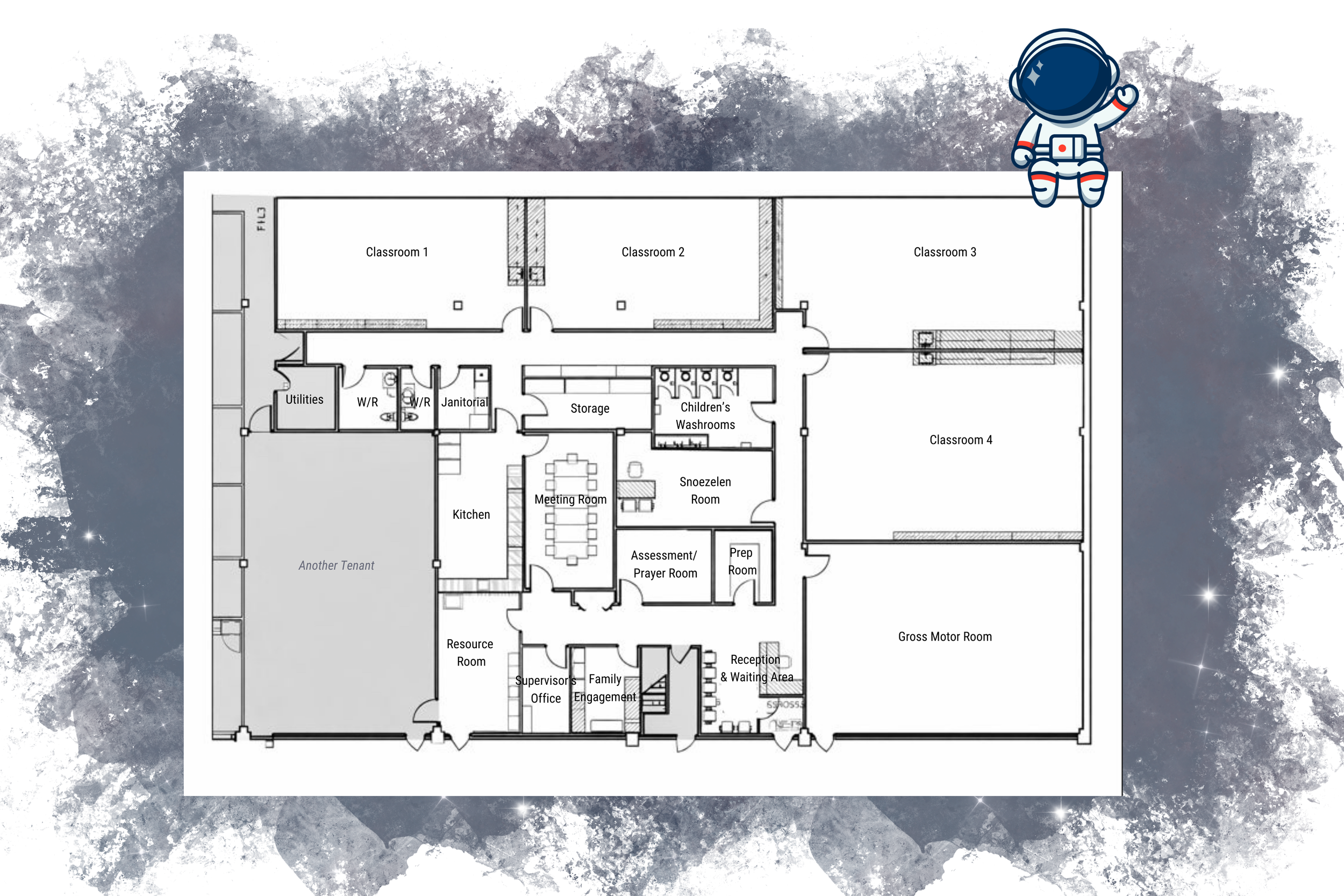
Building a New Launch Pad for Early Learning in West Edmonton
ABC Head Start is currently renovating and preparing for our new West End Campus — a major milestone in our 40+ year journey. This project will allow us to bring our remaining stand-alone classrooms together under one roof in West Edmonton, creating a stable, purpose-designed home for the vulnerable children and families we serve.
Learn more about the project and how you can support the campaign below!
Sources:
Jitsuhara, K., Kubo, M., & Takahashi, K. 2024. Relationship between the psychological effects of Snoezelen multisensory stimulation and stress reduction. Kitasato Medical Journal 54: 42-48. Retrieved from: https://www.kitasato-u.ac.jp/ktms/kaishi/pdf/KMJ54-1/KMJ54-1_42-48.pdf
Parr, C. 2025. Understanding Gross Motor Skills: Development, Milestones, and Examples. Neurological and Physical Abilitation Center. Retrieved from: https://napacenter.org/gross-motor-development/
School Specialty. n.d. Snoezelen Multisensory Environments Fill a Key Need in Schools. Schoolyard by School Specialty. Retrieved from: https://blog.schoolspecialty.com/snoezelen-multisensory-environments-fill-a-key-need-in-schools/
Seeberger, C. 2024. What are Snoezelen sensory rooms? Sensory Friendly Solutions. Retrieved from: https://www.sensoryfriendly.net/what-are-snoezelen-sensory-rooms/
Strong-Wilson, T., & Ellis, J. (2007). Children and Place: Reggio Emilia’s Environment As Third Teacher. Theory Into Practice, 46(1), 40–47. https://doi.org/10.1080/00405840709336547